Consistently modular
AGVs with a strategic advantage in maintenance, adaptability and system integration: Automated guided vehicles are taking on more and more central functions in intralogistics. This raises the demands on their flexibility, availability and future viability. Melkus Mechatronic is responding to this development with a consistently modular vehicle concept, including not only the mechanics and control hardware but also the on-board software developed entirely in-house. The result is autonomous transport systems with maximum ease of maintenance and high availability.
Goeming/Salzburg, 13.05.2025 – More and more companies are using automated guided vehicles (AGVs) for internal transport tasks. Long downtimes are unacceptable. Having alternatives available for emergencies would cancel out the automation gains and is often not even possible. AGVs therefore need extremely high values of availability and reliability.
“One key to long-term high reliability is the use of high-quality materials, combined with mechanical designs that can cope with the challenges of everyday operation, such as uneven ground,” explains Martin Lindner, CEO of the independent Austrian AGV manufacturer Melkus Mechatronic. “Another is a consistently modular design of the vehicles, as this simplifies and speeds up maintenance, repairs and subsequent adjustments, thus ensuring short downtimes.” This is why a fully modular AGV design is at the heart of the Melkus philosophy.
Modularity enhances investment security
All key components of Melkus Mechatronic AGVs are designed as self-contained, industrial-grade modules, many of which are installed in all vehicles from this manufacturer. This applies not only to the robust, industrial-grade drive unit, the Melkus turntable, which enables all Melkus vehicles to drive omnidirectionally. It also applies to the lifting unit, the traction battery, the control unit and the sensors, and even to the vehicle software. Like most vehicle parts, all mechatronic modules can be replaced quickly and without special tools on site by customer personnel after brief training. In addition, the modular design with a high proportion of identical parts, together with the identical design of both skids for driverless forklift trucks, significantly reduces the cost of stocking spare parts.
In addition to simple maintenance, modularity is the key to long-term investment security. It enables quick, even subsequent customisation to individual customer requirements, such as load handling devices or attachments.
Modular control hardware and software
This applies in particular to the central control hardware. This is not a low-quantity custom design, but a modular industrial control system from Sigmatek that has been tried and tested tens of thousands of times in industrial applications. Consisting of stackable modules for CPU, safety and input/output modules, it not only enables fast module replacement in the event of a fault, but also the integration of new technologies, such as additional sensors.
Thanks to object-orientated programming, the on-board software, entirely developed in-house, is also completely modular. Connecting and configuring standardised object classes not only simplifies and accelerates the creation of the target software for the individual vehicle. It also facilitates troubleshooting, software maintenance and continuous improvement as well as testing and commissioning. As part of its future-orientated approach, Melkus uses open standards such as the VDA 5050 interface to connect to any control system, regardless of its manufacturer.
“Customers need practical systems with maximum availability,” concludes Martin Lindner. “This is exactly where our modular approach comes in. We deliver maximum efficiency with minimum downtime.”
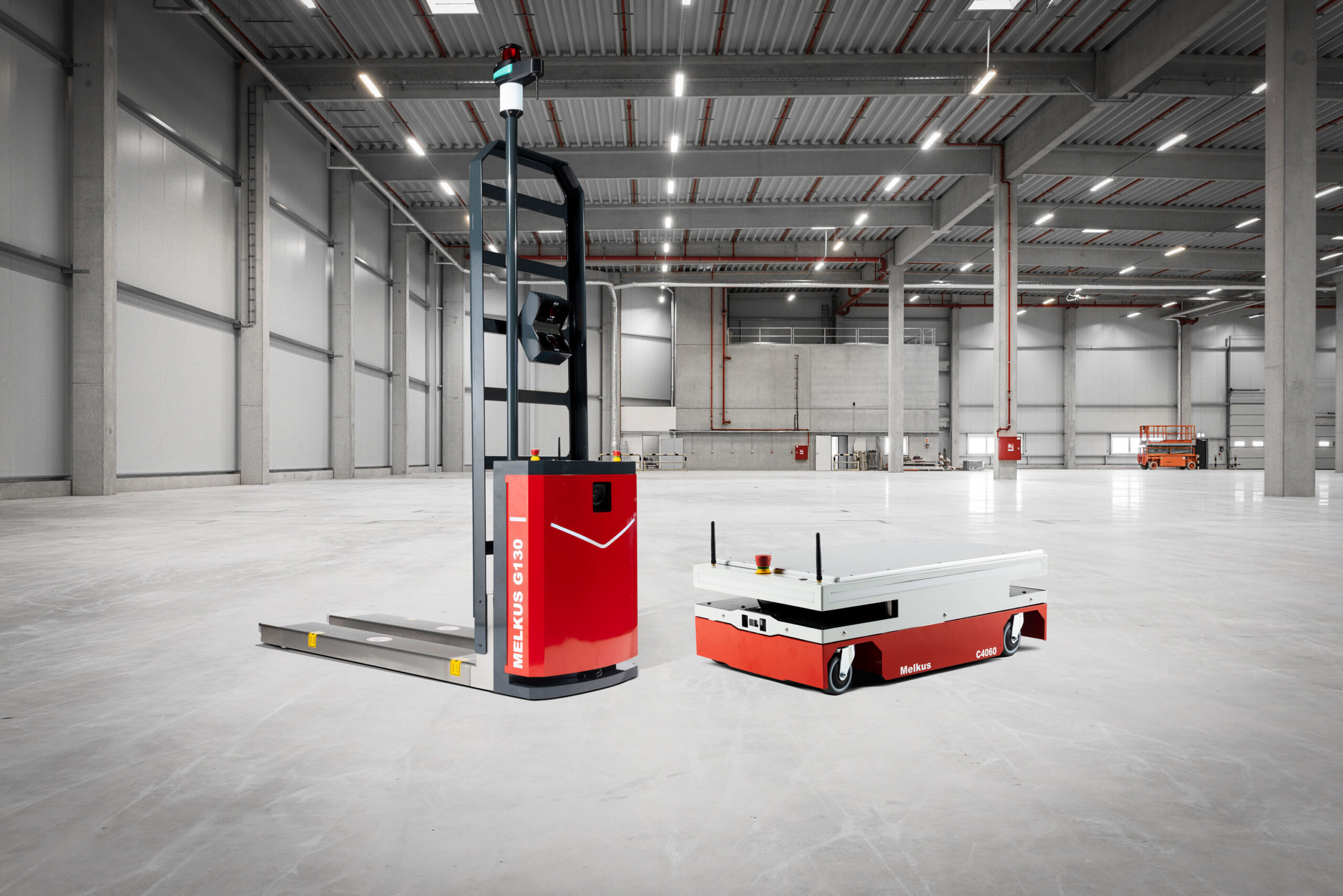
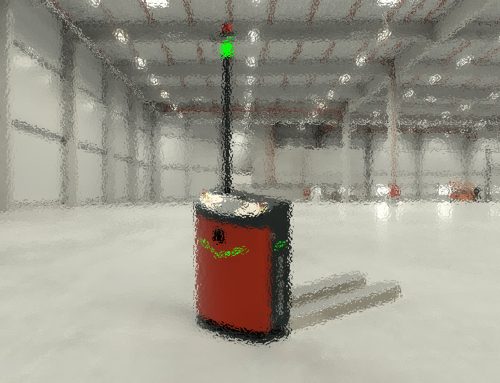
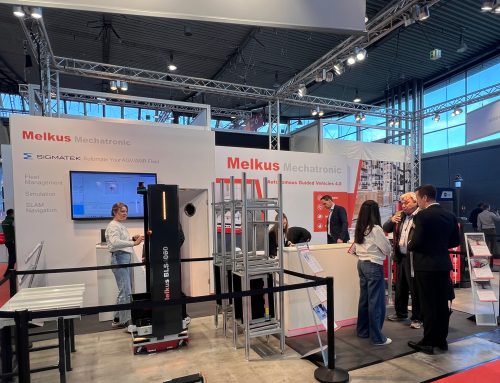
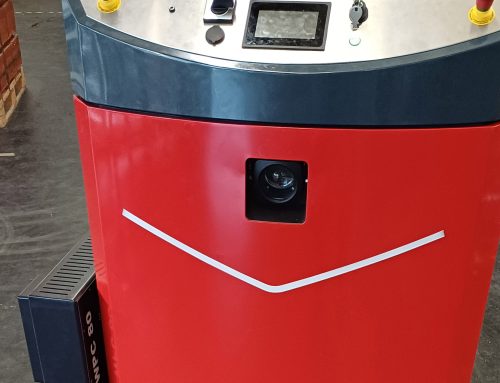
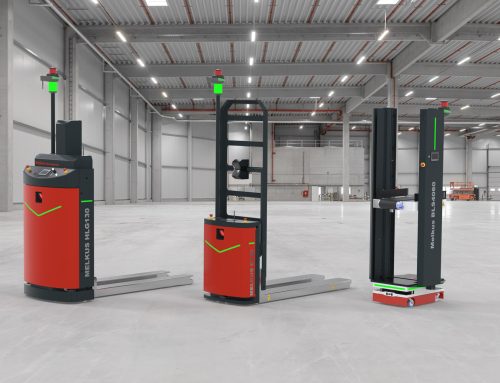
Thanks to their consistently modular design, Melkus Mechatronic AGVs feature short commissioning times, great flexibility and high availability.
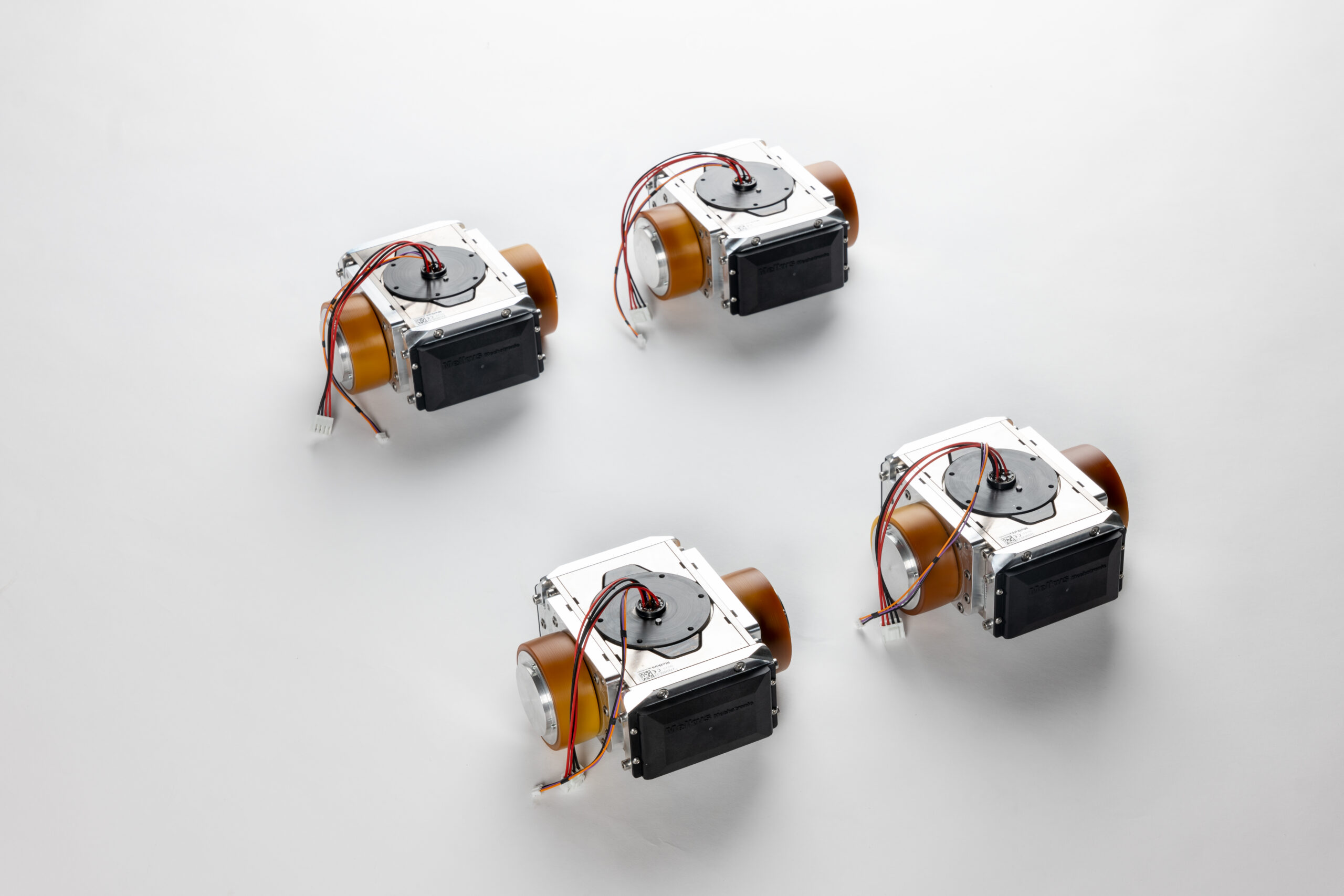
A central element of all AGVs from Melkus Mechatronic is the industrial-grade, omnidirectional drive unit, the Melkus turntable. It can be replaced in just a few minutes without special tools, ensuring a short downtime in the event of a problem.

Martin Lindner, CEO Melkus Mechatronic: “Whether an AGV can continue operations shortly or has to wait for a service technician makes a decisive difference. This is precisely where our modular approach comes in. We deliver maximum efficiency with minimum downtime.”
All images: Melkus Mechatronic