Contactless power supply
Inductive AGV charging reduces maintenance and increases availability: By converting its AGV fleet to inductive charging, Melkus Mechatronic in more ways than one facilitates productivity gains in driverless transport systems (AGVs). Contactless charging reduces the maintenance requirements of charging stations and vehicles. It shortens charging breaks and at the same time enables an increase in vehicle range, bringing customers of the Austrian AGV specialist real added value and a competitive advantage.
Goeming/Salzburg, 21.11.2025 – Whether you call them AGVs (Automated Guided Vehicles), AMRs (Autonomous Mobile Robots) or simply self-driving vehicles, driverless transport systems must first and foremost do one thing: carry out transport orders with as little downtime as possible. “In the logistics environment in particular, availability, i.e. the ratio between travel and downtime, is one of the most decisive criteria for driverless transport systems,” says Dominik Schnitzinger, Head of Software Development & Customer Support at Melkus Mechatronic. “That’s why it’s important for us to increase the range of our vehicles on a single battery charge while reducing the duration of charging cycles.”
Faster charging and increased capacity
To improve the ratio between productive use and unproductive charging breaks, Melkus Mechatronic is gradually converting its fleet to inductive charging. This involves transferring energy to the vehicle without contacts, in the same way as we know it from electric toothbrushes. Although there is no direct cable connection between the energy source and the vehicle, significantly higher currents can flow. This means that the on-board batteries are charged much faster than with contact charging.
The significantly faster energy transfer also makes it possible to increase the battery capacity of the vehicles without having to accept longer charging breaks. The comparatively low volume and weight of the lithium iron phosphate (LiFePO4) batteries used also contribute to this. They facilitate building particularly compact AGVs with increased capacity.The driverless transport vehicles are very energy-efficient not only due to their low weight, but also thanks to their ability to recover energy (recuperation) during braking.
Up to 50 percent higher availability
Energy is transferred via inductive coupling between two adjacent coils. The docking points on both the charging station and the vehicle are closed, flat plastic surfaces. These are not only easy to clean, but also completely maintenance-free due to the absence of contacts that are subject to wear and tear and can be damaged. Together with the reduced charging times and increased battery capacity, this reduces the downtime of AGVs and increases their availability by around 50 percent.
The energy field required for the charging process is only established when the vehicle is present. During the charging process, its range remains within the charging station and AGV. This ensures complete personal safety at all times.
Not an option, but standard
This efficiency-enhancing charging concept has already proven itself in the HLG130 pallet lift AGV. Melkus Mechatronic has now begun converting its entire AGV fleet to this efficiency-enhancing charging technology. The first to be converted is the G130 3.0 pallet lift AGV, which will be presented at LogiMAT in spring 2026. Other vehicles will gradually follow, with the WPC80 providing a uniform charging station for all Melkus Mechatronic AGVs, so customers can easily implement mixed AGV fleets.
“As a technological pioneer in the AGV industry, we do not offer the inductive charging concept as an option, but integrate it into our AGVs as standard,” explains Dominik Schnitzinger. “This allows our customers to benefit directly from a substantial increase in vehicle productivity.”
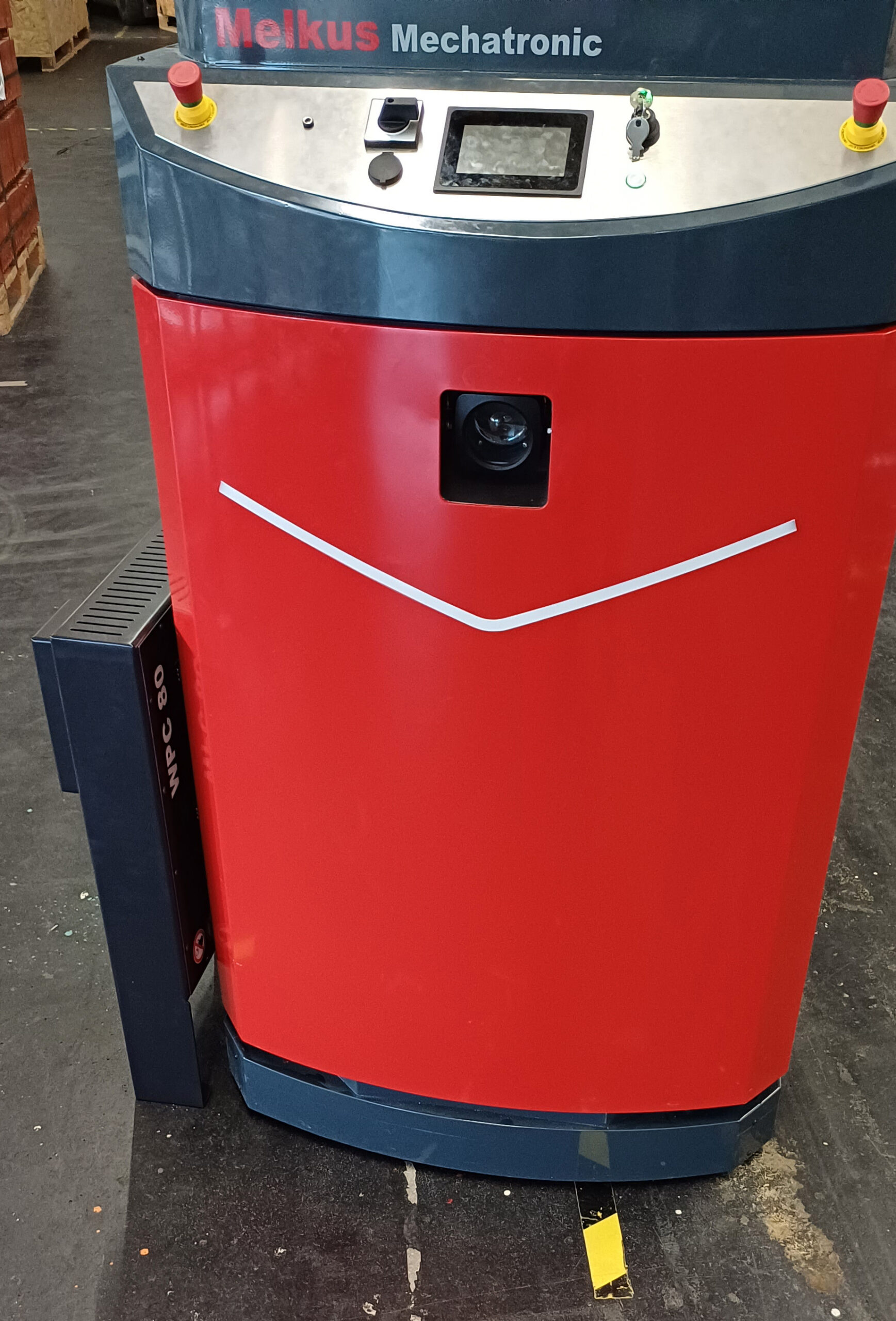
Contactless AGV charging not only reduces maintenance requirements for charging stations as well as vehicles, it also enables more energy to be transferred in less time, increasing the uptime of mobile robots by around 50 percent.
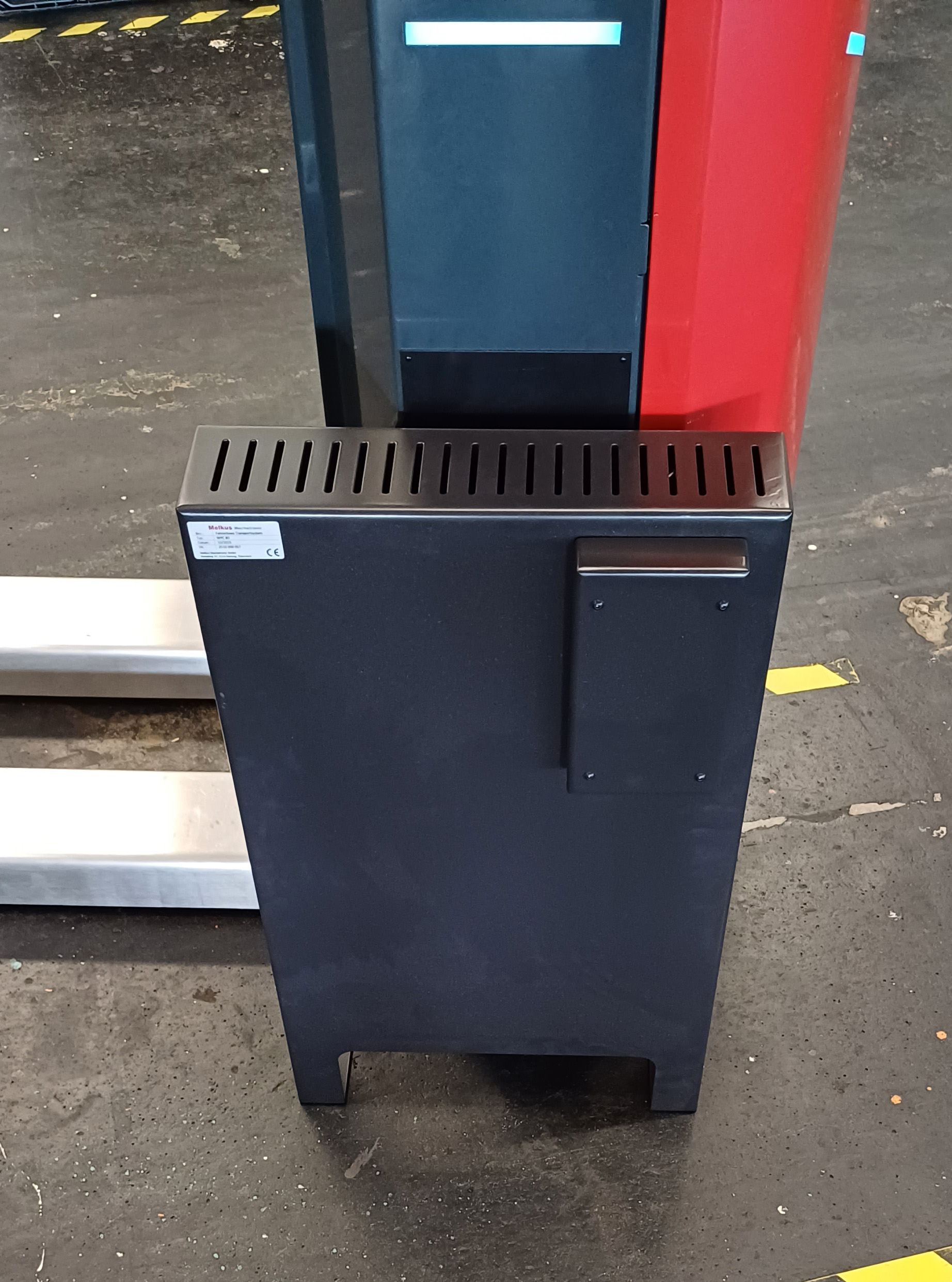
The energy field is only generated when the vehicle is present and remains within the charging station and AGV during the charging process, ensuring complete personal safety at all times.

Dominik Schnitzinger, Head of Software Development & Customer Support at Melkus Mechatronic: “We do not offer the inductive charging concept as an option, but integrate it into our AGVs as standard. This allows our customers to benefit directly from a substantial 50% increase in vehicle productivity.”
All images, unless otherwise stated: Melkus Mechatronic.