Improved laser visibility boosts intralogistics throughput
Sensor technology with no blind spots improves safety and increases AGV operating speed: Melkus Mechatronic develops and manufactures innovative driverless transport vehicles such as AGVs (Automated Guided Vehicles) and AMRs (Autonomous Mobile Robots). By installing safety scanners all round the vehicle, the Austrian manufacturer has eliminated all blind spots. This has improved the safety of its fully manoeuvrable driverless pallet transporters, enabling them to travel at full speed in any direction, including when moving sideways.
Sensor technology is an integral and key component of automated guided vehicles (AGVs). In most cases, 360° laser scanners scan the surroundings at ground level. This allows them to collect data for contour-based navigation. Furthermore, the detection of unexpected obstacles helps prevent collisions and ensures personal safety by enabling the vehicle to stop safely or take evasive action.
Blind spots eliminated
In many AGVs or AMRs, a single 360° sensor ensures safety when travelling in the main direction of travel. As the sensor’s field of view is restricted by the vehicle and does not cover the full 360°, the speed must be significantly reduced when reversing. Two-way AGVs from Melkus Mechatronic, such as the Melkus Q40, Melkus C52, Melkus C4060 and Melkus BLS4060 Rack Stacker, are therefore each equipped with two 360° sensors, which ensure that the vehicle can travel at full speed whilst reversing, whilst maintaining the highest level of personal safety.
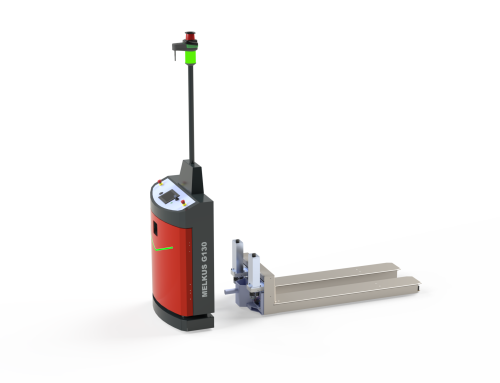
The Melkus G130 3.0 and Melkus HLG130 pallet AGVs are equipped with three and four scanners respectively. These nano-scanners are located at the corners of the drive unit and in one or both of the fork tips. By overlapping the individual fields of view, Melkus Mechatronic achieves a seamless 360° panoramic view with no blind spots.
Maximum speed even when travelling sideways
This enables the fully manoeuvrable vehicles to navigate at a maximum speed of 1.5 m/s not only in the main direction of travel, but also in any orientation, i. e. at any angle to it. They can therefore, for example, retrieve pallets from a rack aisle at high speed without first having to spend time turning into the main direction of travel. This not only saves time on the individual journey, but also ensures that the rack aisle is cleared more quickly for the next transport with another vehicle.
This helps make intralogistics processes significantly more efficient whilst ensuring full personal safety. Furthermore, eliminating unnecessary turning and manoeuvring movements saves energy. This extends the intervals between necessary battery charging breaks and reduces downtime. To protect the sensors from dirt, damage or failure, they are mounted beneath the chassis.
No collisions in mid-air
In addition, Melkus Mechatronic also offers a ToF camera as an optional extra. This time-of-flight technology enables the environment to be scanned at a higher level, allowing obstacles that protrude into the room above the field of view of the 360° laser scanners – such as table tops or shelves – to be detected.
“Our aim is to have people and machines work together safely and efficiently,” explains Martin Lindner, CEO of Melkus Mechatronic. “The sensor technology in our pallet AGVs is a real milestone, as it enables omnidirectional operation with maximum efficiency whilst ensuring uncompromising personal safety.”
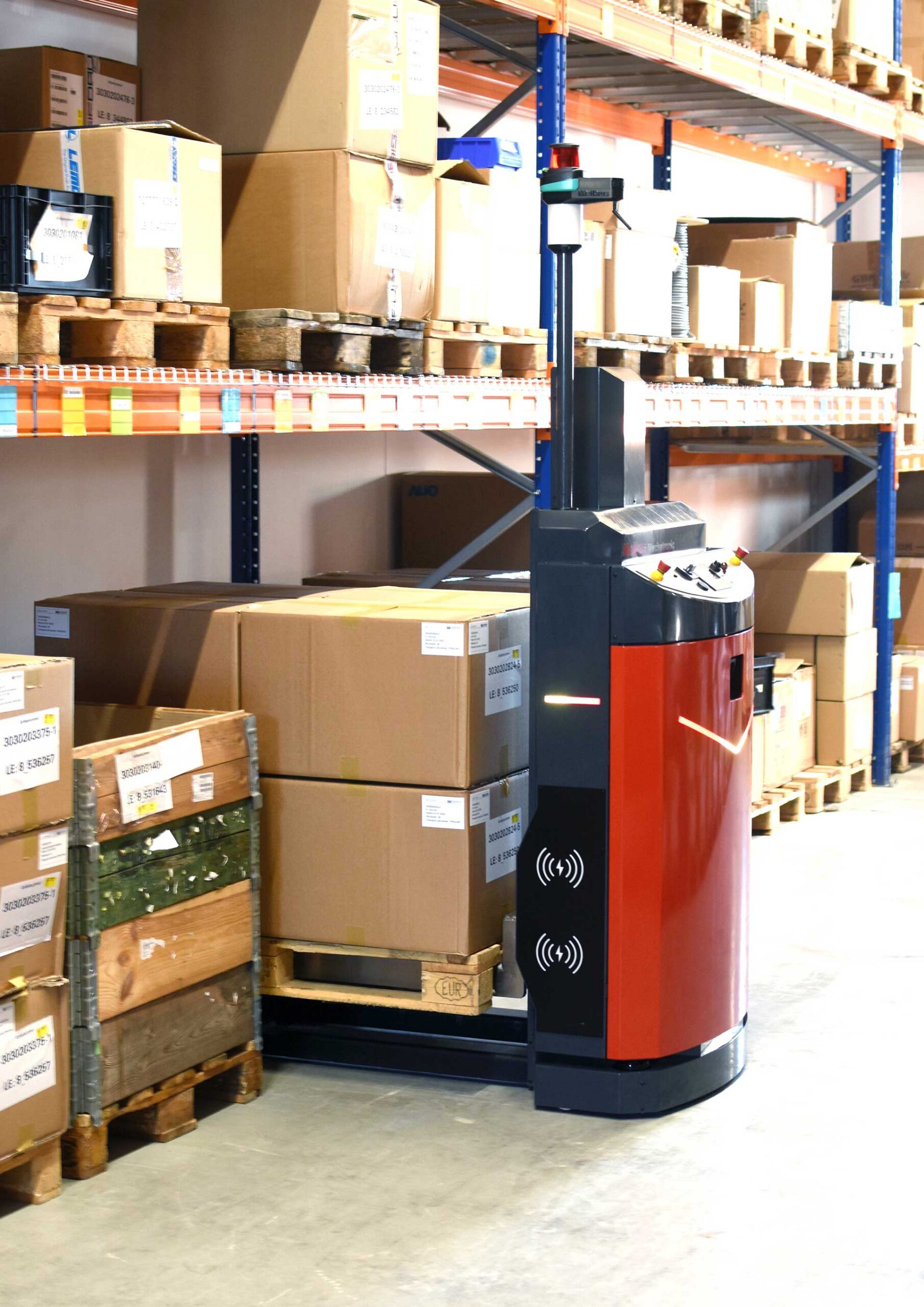
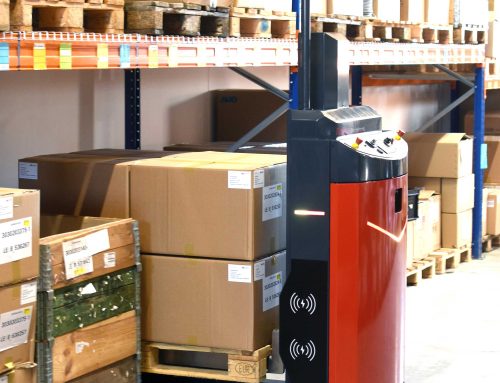
The G130 3.0 and HLG omnidirectional pallet AGVs from Melkus Mechatronic are equipped with several 360° laser scanners, which are housed in a protective casing, for navigation and pedestrian safety.
Photo: P. Kemptner
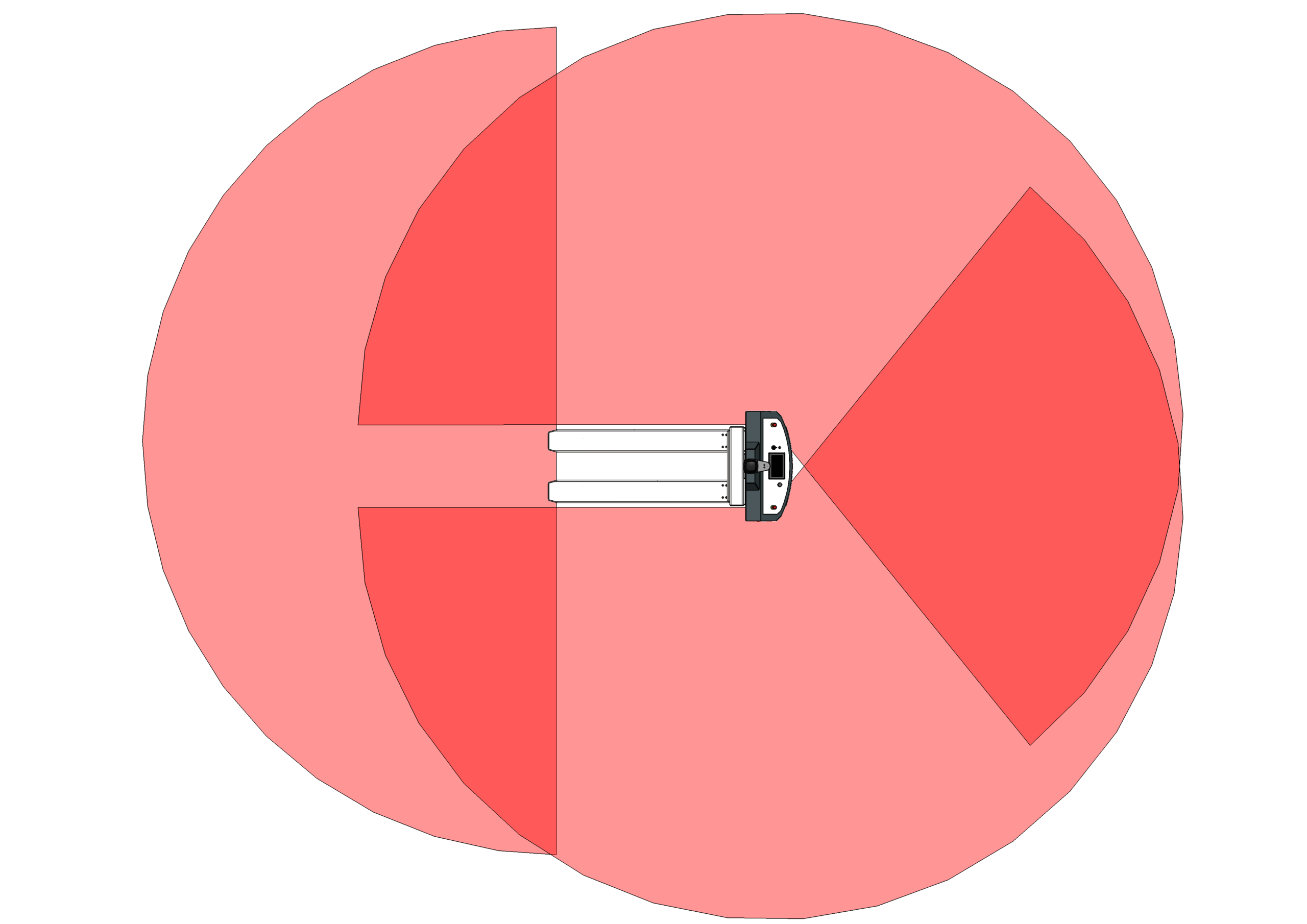
The seamless 360° all-round view with no blind spots enables omnidirectional driving at full speed whilst ensuring maximum personal safety. This allows users to make their intralogistics processes significantly more efficient.
Chart: Melkus Mechatronic

Martin Lindner, CEO of Melkus Mechatronic: “The sensor technology in our pallet AGVs is a real game-changer. It enables omnidirectional operation with maximum efficiency whilst ensuring uncompromising personal safety.”