Braking for profit
During goods transport and handling, Melkus AGVs use energy recovery to extend operations: The kinetic energy generated during braking is often wasted as heat. Not in Melkus Mechatronic AGVs. Their electric motors convert this energy into electrical energy, which is then fed back into the battery. This increases energy efficiency and extends operating time.
Goeming/Salzburg, 12.10.2026 – Autonomous guided vehicles (AGVs) frequently accelerate and brake during day-to-day operations: at junctions, in front of handover stations and when entering warehouse aisles. With conventional braking systems, the kinetic energy generated in the process is largely converted into heat and is therefore lost for further operation. With modern electric drive systems, this braking energy can be recovered. Vehicles from Melkus Mechatronic utilise this process, known as recuperation, to feed the energy automatically recovered while driving back into the battery, thereby increasing the vehicles’ range.
Motors double as generators
Electric motors convert electrical energy into kinetic energy, i.e. motion. This is how electricity from the battery powers the AGV. Every electric motor can also act as a generator. When it is rotated, it generates electrical energy. If the vehicle’s inertia keeps it moving, the drive motors can be used for braking. The same applies to the motors in the load-handling equipment, for example a high-lift fork. These counteract the force of gravity when the load is being lowered.
In many electric vehicles, this energy is converted into heat via resistors and is wasted. At Melkus Mechatronic, energy recovery is an integral part of the drive concept and battery management. Both the drive motors and the lifting motors are utilised for energy recovery. What is lost as heat in conventional drive systems is converted into energy for the next transport operation in Melkus Mechatronic’s AGVs.
“In our vehicles, we use state-of-the-art drive control technology to convert the kinetic energy generated during braking or when lowering the load into electricity, thereby recharging the battery,” explains Martin Lindner, CEO of Melkus Mechatronic. “Regenerative braking cannot be switched off on our AGVs. It substantially extends their range and the operational time between two charging breaks.” It also makes a small but important contribution to avoiding unnecessary CO₂ emissions.
About Melkus Mechatronic
Melkus Mechatronic GmbH is an innovative technology company based in Salzburg. With more than ten years of experience in the field of AGVs and mobile robotics, it provides customers with highly available AGVs for flexible in-house transport with maximum reliability. Swiftly installed and commissioned, these enable Melkus operators to organise their intralogistics more efficiently and to establish resource-saving processes. Melkus employs highly qualified and committed staff and offers a range of six AGVs for a wide variety of applications. www.melkus-mechatronic.com
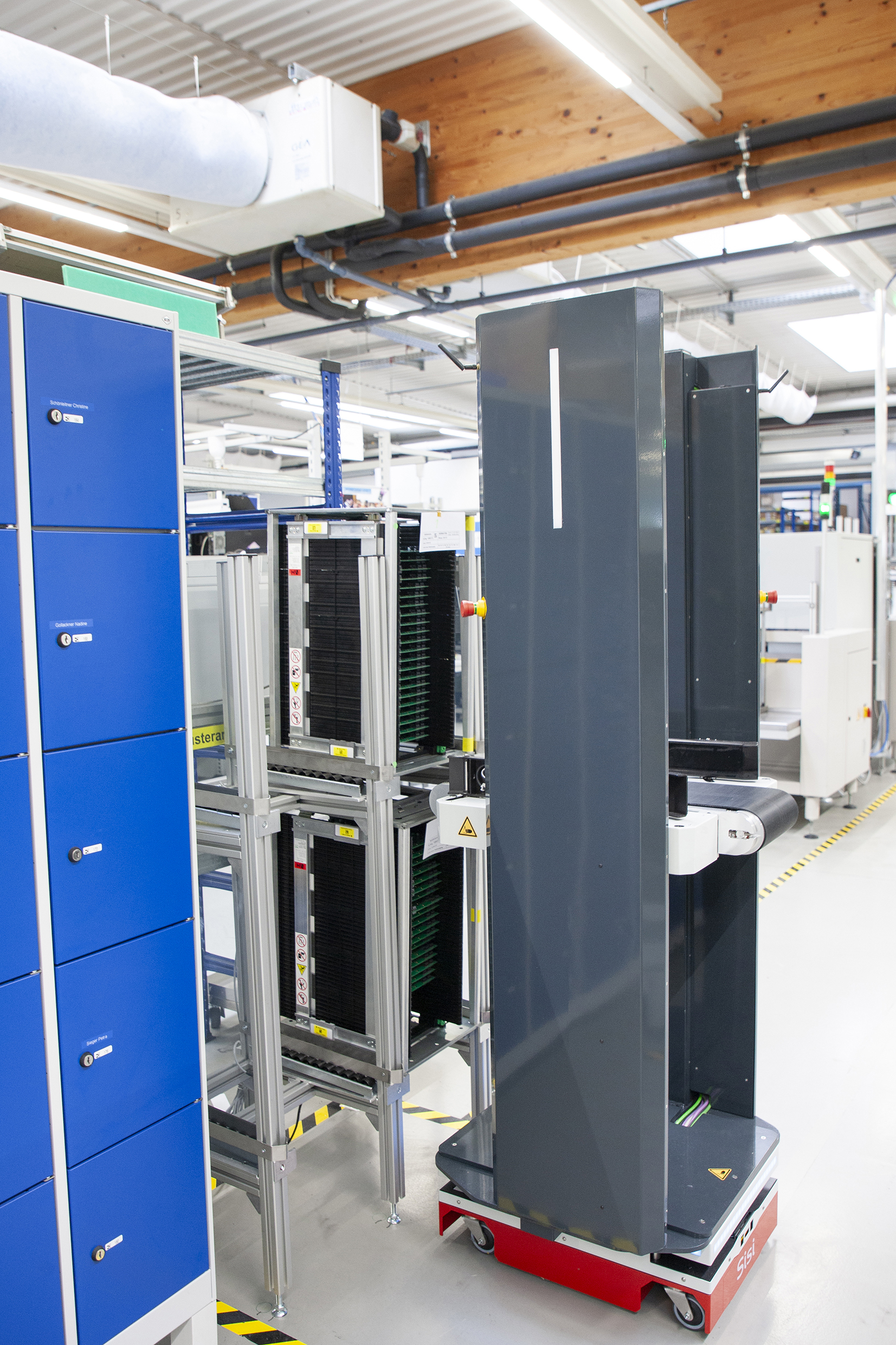
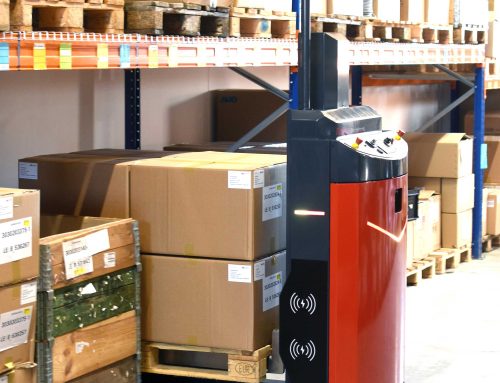
Using state-of-the-art drive control technology, autonomous transport robots from Melkus Mechatronic convert the kinetic energy generated during braking or when lowering a load into electricity, thereby recharging the battery.
Photo courtesy of Sigmatek

Martin Lindner, CEO, Melkus Mechatronic: “The energy recovery system on our AGVs cannot be switched off. It substantially extends their range and the operational time between two charging stops.”
Photo: private